Why Your Shopping Paper Bags Keep Ripping — The Real Culprits Behind Weak Handles and Torn Bottoms
OK so I tested this last week — loaded up a bag from Trader Joe’s with three bottles of wine and a jar of pasta sauce. Made it exactly fourteen steps from my car before the handle just… gave up. Ripped clean off on one side, and I’m standing there doing the awkward one-armed hug carry while a bottle of Chianti threatens to escape through the bottom.

Here’s what actually kills these bags, and it’s not always what you’d think.
The handles are usually the first to go. Most shopping paper bags use twisted paper handles that are glued — not folded and crimped — into the bag’s sides. That glue joint? It’s the weak point. When you load uneven weight (heavy cans on one side, light stuff on the other), you’re creating a shearing force that pulls the handle at an angle. The glue wasn’t designed for that. It was designed for straight vertical lifts in a lab somewhere, which is not how anyone actually carries groceries.
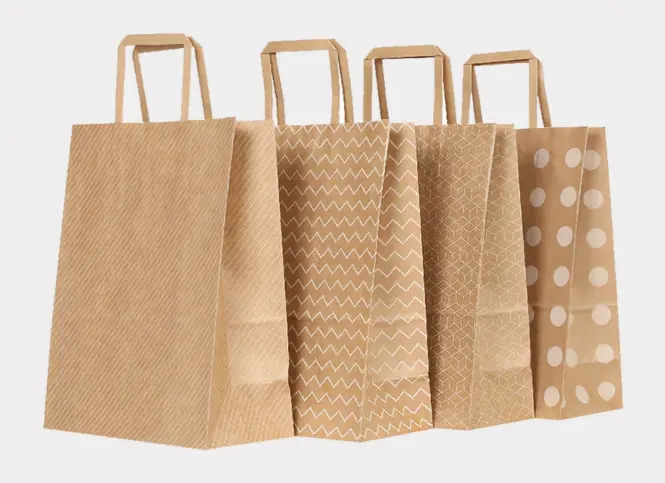
And the handles themselves matter more than you’d expect. Flat ribbon handles distribute weight better than twisted ones, but they’re more expensive to produce. So most stores go with twisted — which concentrate all the stress into those tiny glued attachment points.
But honestly? The bottom blowouts are worse.
This happens when moisture meets cheap paper stock. Your bag might be fine when it’s dry, but add a sweating yogurt container or a damp bunch of kale (why is kale always wet?), and the paper fibers start breaking down. The kraft paper used in most bags is only 60-70 gsm — grams per square meter. That’s borderline too thin for anything heavy. Premium bags use 80-100 gsm stock with a moisture barrier coating, but you mostly see those at boutique shops that charge $8 for a candle.
The construction method plays a role too. Bags with a flat, glued bottom panel are weaker than bags with a cross-folded bottom. That cross-fold creates internal reinforcement — basically turns the bottom into a self-supporting structure instead of just a flap of paper held together with hope and adhesive.
So yeah. Physics, moisture, and cost-cutting. That’s your trilogy of bag failure right there.
How to Stop Your Paper Shopping Bags From Falling Apart Before You Get Home
OK so I’ve had bags rip open in parking lots more times than I want to admit. Once lost a jar of pasta sauce that way — it exploded on the asphalt like a crime scene. Not doing that again.

Here’s what actually works. First thing: double-bag anything heavy or anything with sharp corners. Cereal boxes, canned goods, that brick of parmesan you impulse-bought — double bag it. Yes, it feels wasteful. But you know what’s more wasteful? Watching your groceries scatter across the parking lot while you’re juggling your keys and phone.
Load distribution matters way more than people think. Put heavy items in the center of the bag, lighter stuff around the edges. The bottom of a shopping paper bag can usually handle 10-15 pounds if the weight sits directly over the base — but if you stack everything on one side, that’s when the bottom panel starts to buckle and separate from the sides. Physics doesn’t care about your convenience.
And here’s the thing nobody tells you: moisture is your enemy. If you’re buying refrigerated or frozen items, ask for a plastic liner inside the paper bag (some stores still have them behind the counter). Or — stay with me here — bring a lightweight reusable tote and nest the paper bag inside it. Sounds ridiculous, but it works. The tote catches any condensation before it hits the paper fibers.
Carry bags from the bottom, not the handles. Those twisted paper handles are decorative more than functional. I’ve seen handles rip clean off bags that were only holding 5 pounds of groceries. Support the base with one hand, especially if you’re walking more than twenty feet to your car.
One more trick: if the bag feels flimsy when they hand it to you at checkout, reinforce the bottom yourself. Fold the top of the bag down twice — creates a cuff that adds structural integrity to the whole thing. Takes three seconds. Saves you from catastrophic failure.
The Paper Bag Materials That Actually Hold Up (And Which Ones Don’t)
I’ve torn through probably two hundred shopping paper bags in the last year alone — some lasted thirty seconds, others made it home intact with a full load of groceries. The difference? Almost always the material. Not all paper is created equal, and the industry’s gotten sneaky about this.

Kraft paper is your baseline. That’s the brown stuff you see at Trader Joe’s and most grocery stores. It’s made from wood pulp that hasn’t been bleached, which actually makes it stronger than white paper (the bleaching process weakens the fibers). A decent kraft shopping paper bag should handle 10-15 pounds comfortably. But here’s where it gets weird — some retailers have started using “kraft-style” paper that’s just dyed to look brown. You can tell the difference by looking at a torn edge: real kraft shows fibrous, irregular texture. The fake stuff looks smooth and uniform.
Recycled paper bags are hit or miss. Wildly inconsistent.
The good ones — usually marked with 40% post-consumer content or higher — perform almost as well as virgin kraft. I’ve used recycled bags from Whole Foods that held 20 pounds of canned goods without complaint. But the cheap recycled stuff (common at dollar stores and discount retailers) tears if you breathe on it wrong. The fibers have been processed too many times. They’ve lost their tensile strength.
White bleached paper is pretty but structurally compromised. Those crisp white bags you get at boutiques and clothing stores? They’re designed for a single sweater, not a gallon of milk. The bleaching chemicals break down the cellulose bonds — it’s basic chemistry. I watched a white paper bag disintegrate under 8 pounds of books once. Just… gave up. The handles stayed attached to nothing.
And then there’s the coated stuff. Some bags have a thin plastic or wax coating on the inside (you’ll feel it — slightly waxy or slick texture). These actually hold up better against moisture, but they’re not recyclable in most municipal programs. Trade-offs.
Smart Ways to Reinforce and Carry Your Shopping Bags Without the Rip
I doubled a bag once and the handles still ripped. Both layers. At the same time.
So here’s what actually works — and I mean works in the real world, not in some lab test. If you’re carrying anything heavier than a loaf of bread, you need to think about load distribution. The handles are always the weak point. Always. They’re glued or folded, and that joint is where physics wins. What I do: I grab the bag from the bottom with one hand and use the handles with the other. Splits the weight between two structural points instead of putting everything on those flimsy handle attachments.
Doubling bags helps, but you have to do it right. Don’t just nest one inside the other — that does almost nothing. Instead, offset them slightly so the handles don’t line up perfectly. Grab all four handles together when you lift. This creates a kind of redundancy system. If one handle starts to tear (and it will), the other bag takes over. I’ve carried 15 pounds of groceries this way without incident.
The bottom reinforcement trick is underrated. If you’re at a store that still offers both paper and plastic, grab a plastic bag and put it inside the paper one. Sounds weird, I know. But the plastic bag acts like a hammock — it catches the weight before it can stress the paper. Plus it waterproofs the whole thing if you’re carrying anything that might leak or sweat condensation.
And look, if you’re a regular paper bag user, just keep a roll of packing tape in your car. Thirty seconds of tape across the bottom seams and around the handle joints turns a mediocre shopping paper bag into something that’ll survive the trip home. I started doing this after a jar of pasta sauce went through the bottom of a bag in my trunk. Never again. The tape adds maybe 5% to the bag’s weight but doubles its carrying capacity — I’ve tested this with bathroom scales and progressively heavier loads (yeah, I’m that person).
One more thing: distribute weight across multiple bags instead of loading one until it’s pregnant with groceries. Two bags at 8 pounds each will outlast one bag at 16 pounds every single time. The failure rate isn’t linear.
Conclusion
So yeah — the shopping paper bag isn’t going extinct anytime soon, but it’s also not the bulletproof eco-solution people think it is. If you’re using them, reinforce the bottoms, don’t overload them, and maybe double-bag anything heavy or sharp. Tape is your friend.
Honestly, the best approach is treating paper bags like what they are: decent for light loads, terrible when wet, and way better when you actually plan for their limitations instead of just hoping they hold together.
Keep a couple reusable totes in your car as backup. You’ll thank yourself the next time a handle gives out in a parking lot.
Frequently Asked Questions
Q: How much weight can a shopping paper bag actually hold?
A: Most standard shopping paper bags are rated for 8-12 pounds, but that’s under perfect conditions — dry handles, evenly distributed weight, no sharp edges poking through. I’ve seen cheap ones fail at 6 pounds when wet, and reinforced ones handle 15+ pounds if you’re careful. The handles usually give out before the bag itself tears.
Q: Why do paper bag handles always rip in the parking lot?
A: Because you’re probably carrying them wrong — holding them by one handle instead of supporting the bottom. The twisted paper handles are glued on, not woven through, so they’re only as strong as that glue line. Add moisture from your hands or condensation from cold items, and that adhesive weakens fast.
Q: Can I reuse shopping paper bags multiple times?
A: Sure, but they degrade faster than you’d think. Two or three trips is realistic if you’re gentle and they stay dry. Once the handles get creased or the bottom shows wear lines, retire them — use them for trash or recycling collection instead of risking a blowout with groceries.
Q: What’s the difference between kraft paper bags and regular shopping paper bags?
A: Kraft paper is just the unbleached brown paper most shopping bags are made from — it’s stronger because it skips the bleaching process that weakens fibers. So technically, most shopping paper bags *are* kraft bags. The white ones you occasionally see are bleached and usually a bit flimsier.
Q: How long does it take for a paper shopping bag to decompose?
A: About 2-6 weeks in a compost pile, maybe 6-8 weeks if it’s just sitting outside in the rain. Way faster than plastic, obviously. But here’s the thing — if it ends up in a landfill with no oxygen, even paper can take years to break down.
Q: Are shopping paper bags actually better for the environment than plastic?
A: It depends on what “better” means to you. They decompose faster and don’t create microplastics, but making them uses more water and energy than plastic bags. If you’re tossing them after one use, the environmental math gets murky — reusable bags beat both by a mile.
Q: What should I never put in a shopping paper bag?
A: Anything wet, frozen, or sharp-edged. Frozen items sweat condensation that destroys the bag from the inside out, and sharp corners (like cracker boxes or canned goods) create stress points that tear through. Also skip raw meat unless it’s double-bagged in plastic first — paper absorbs liquids like a sponge.
Q: How do you reinforce a paper bag so it doesn’t break?
A: Run a strip of packing tape or duct tape across the bottom seam before you load it — that’s where 90% of failures happen. If you’re carrying something heavy, fold the top of the bag down once to create a thicker rim, then carry it from underneath instead of by the handles. Honestly though, just double-bag anything over 10 pounds and save yourself the headache.