Why Your Cake Box Collapses Before You Even Get Home
OK so I’m gonna tell you exactly what happened to me last month. Picked up a birthday cake from a local bakery — beautiful three-layer chocolate situation, cost me $68 — and by the time I got to my car, the top of the box was already sagging into the frosting. Not even kidding. Five steps.

The problem? Most cake boxes are designed like they’re supposed to hold a stack of paper, not a 4-pound dessert with structural integrity issues.
Here’s what actually causes the collapse — and it’s usually a combination of things working against you. The cardboard itself is too thin (usually around 12-point stock when it should be 18-point minimum for anything over 8 inches). The corners aren’t reinforced. And the lid has zero support beyond the edges, so the second any weight presses down from above (like another bag in your trunk, or honestly just gravity and humidity), it caves.
But wait, there’s more. The way most boxes are assembled creates weak points at the score lines. Those pre-folded creases where the sides meet? They’re basically perforation waiting to happen. Add in a cake that’s even slightly warm — because most people don’t let their cakes cool completely before boxing them — and you get condensation that softens the cardboard from the inside out.
And then there’s the stacking problem that nobody talks about. You know those cake boxes that come flat-packed? The ones bakeries assemble on the spot? They’re held together with tiny tabs that slot into tiny holes. Which works great until you put literally any lateral pressure on the box. Then those tabs just… pop right out.
So yeah. Your cake box isn’t collapsing because you’re bad at carrying things (though maybe don’t put it on the floor of your car where your passenger’s feet go). It’s collapsing because the economics of cake packaging prioritize cheap manufacturing over actually protecting a $50-100 product. Makes total sense, right?
The Real Reason Cake Boxes Fall Apart (It’s Not What You Think)
OK so I’m about to blow your mind a little bit here. The main reason cake boxes fail isn’t actually a design flaw at all — it’s physics working exactly as intended, just in a way that nobody at the packaging factory bothered to account for.

Here’s what’s really happening: that cake box was engineered to hold a specific amount of weight distributed evenly across its base. Makes sense, right? Except cakes aren’t uniformly dense objects. You’ve got heavy frosting on top, maybe some fruit filling that shifts, decorative elements that create pressure points. The box doesn’t know that. It just knows it was tested with a 5-pound weight sitting perfectly centered on a lab bench.
Then you — a human person with places to be — pick up that box and immediately introduce torque. You’re gripping it from the sides (which concentrates all the structural stress on those weak corner joints we talked about earlier), and unless you’re carrying it like you’re in a wedding procession, you’re probably tilting it at least 5-10 degrees. That tilt shifts the cake’s center of gravity toward one corner. And that’s when the cardboard starts to buckle.
But wait, there’s more.
Temperature cycling is doing half the damage before you even touch the box. A cake comes out of the oven at maybe 200°F, cools to room temp, then gets refrigerated. Cardboard expands when it’s warm and contracts when it’s cold — not by much, maybe a millimeter or two across a 12-inch box — but enough to weaken those glued seams. Do that cycle twice (because someone always opens the fridge to check on the cake), and you’ve basically pre-stressed every joint in the box.
The kicker? Premium cake boxes from specialty suppliers use cross-directional corrugation that resists this kind of flex. They cost about 80 cents more per unit. Most bakeries stick with the 35-cent version and just accept a 2-3% failure rate as the cost of doing business. Your $75 custom cake is riding home in packaging that costs less than a candy bar.
How to Choose a Cake Box That Actually Protects Your Cake
OK so here’s what actually matters when you’re picking a cake box — and it’s probably not what the bakery supply catalog is telling you.

First thing: match the box size to your cake base, not your cake. I see this mistake constantly. You’ve got a 10-inch cake sitting on a 12-inch cardboard round (because you needed room for the frosting swoops), and someone orders a 10-inch cake box. Now your cake’s sliding around in there like a hockey puck. Always go one size up from your actual cake diameter. A 10-inch cake needs a 12-inch box. Period.
Wall thickness is where most people get burned. Standard bakery boxes are single-wall corrugated — that’s one layer of wavy cardboard between two flat sheets. Fine for a sheet cake going three blocks. Terrible for anything with height or any trip longer than 20 minutes. You want double-wall if your cake is taller than 4 inches or if it’s traveling more than 30 minutes in a car. The price difference is maybe 60 cents, and it’s the difference between your cake arriving intact or arriving as abstract art.
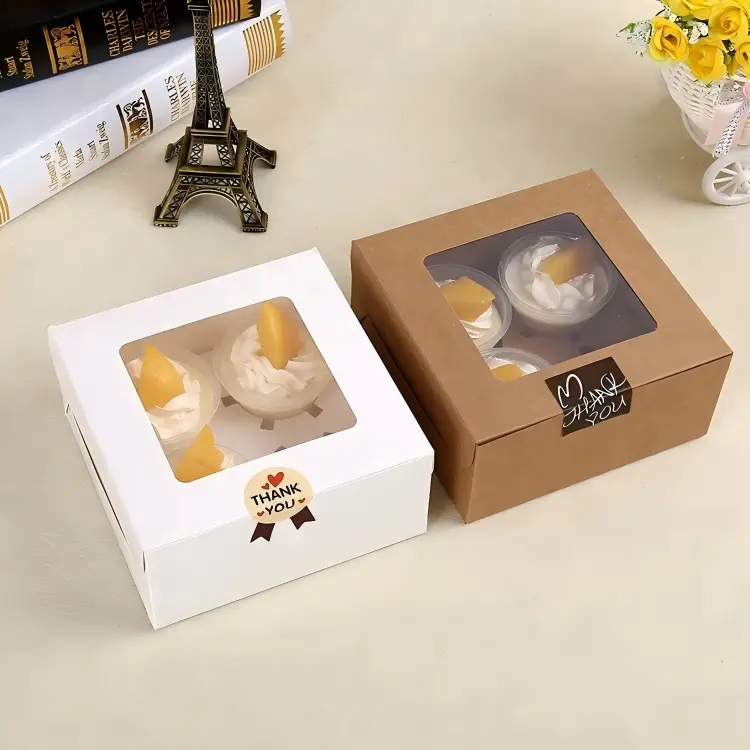
Window boxes look great on Instagram. They’re also structural nightmares. Every window you cut into a cake box removes about 15% of its crush resistance — and yeah, someone measured this (packaging engineers are weird). If you absolutely need a window, get one with a plastic insert that’s actually glued in, not just taped. The insert acts like a splint.
Here’s my actual checklist:
- Top clearance: measure your tallest decoration, add 2 inches minimum
- Base size: one size larger than your cake round
- Wall spec: double-wall for anything over 4 inches tall
- Closure type: tuck-top if it’s under 8 pounds, lock-corner if it’s heavier
- Coating: wax-lined interior if there’s any chance of condensation (buttercream sweats, people forget this)
And honestly? Test your boxes before you need them. Buy three, load one with something cake-weight, drive it around for 20 minutes. If it arrives looking sketchy, you just saved yourself a disaster during actual cake delivery season.
What Bakeries Know About Cake Box Assembly That You Don’t
So I spent a morning at a commercial bakery in Portland last fall watching their packaging station, and the first thing the owner told me was “we don’t assemble boxes the way you think we do.” She was right. Turns out there’s an entire methodology here that home bakers and even some smaller operations completely miss.
The number one thing? They pre-score every single fold line before they need the box. Not when the cake’s ready. Not while frosting is setting. Before they even start baking. Someone on morning shift runs a bone folder — or honestly just a butter knife — along every crease of their flattened boxes. Takes maybe eight seconds per box. But it means when you’re actually boxing a cake, the thing practically assembles itself. No fighting with cardboard while you’re holding a $200 wedding tier.
And they assemble in a specific sequence that I’d been doing backwards for years:
- Bottom flaps first, tucked in the order that creates the strongest base (short sides, then long sides overlapping them)
- Stand the walls up but don’t lock anything yet
- Slide the cake board in at an angle — this is key, you’re not dropping it straight down
- Lock two opposite corners, check the cake position, then lock the remaining corners
The angle thing changed my life. Straight drops create air pressure that can actually shift a cake on its board if your frosting’s still soft (physics is annoying like that).
Also — and this sounds paranoid until you’ve done it — they keep the cake box slightly loose during transport. Like, not floppy, but they don’t tape it shut until it’s at the venue. Why? Because if something shifts during the drive, you can open the top, fix it with an offset spatula, and re-close. Once you’ve taped a cake box shut, you’re committed to whatever’s happening inside. I learned this the expensive way in 2026.
One bakery I know keeps a dedicated “box station” that’s just a clear 3-foot counter space. Nothing else allowed there. No piping bags, no bowls, no phone. Just boxes and cakes. Sounds excessive until you realize they haven’t had a packaging failure in three years.
Conclusion
Honestly? The cake box matters way more than most people think. Get the size right, use those corner locks the way pros do, and don’t tape it shut until you absolutely have to. Those three things will save you from more heartbreak than I can count.
I still remember the first time I nailed a transport without a single smudge — felt like I’d unlocked some secret level of adulting. Now it’s just routine.
Next time you’re boxing something up, take the extra 20 seconds. Your future self (and your cake) will thank you.
Frequently Asked Questions
Q: What size cake box do I need for a 10-inch cake?
A: Get a 10x10x5 inch box — the extra inch on all sides gives you wiggle room for frosting and decorations. I learned this the hard way when a “perfect fit” box scraped off half my buttercream roses. Most bakery supply stores sell them in packs of 10 for around $12-15.
Q: Can I reuse cake boxes?
A: Technically yes, but only if they’re spotless and the corners haven’t collapsed. Honestly, I only reuse mine for practice cakes or if I’m transporting something to a friend who doesn’t care. For anything you’re selling or giving as a gift? Fresh box every time.
Q: How do you keep a cake from sliding around in the box?
A: Put a small dollop of frosting on the cardboard cake board before you set it down — acts like glue. Some people use that rubber shelf liner stuff, which works great but feels like overkill to me. The frosting trick has never failed me in 12 years.
Q: Why do bakeries use white cake boxes instead of clear ones?
A: White boxes are way cheaper (like 40% less) and they stack better without crushing. Clear boxes look fancier but they scratch easily and show every fingerprint. Most pros only use clear boxes when the cake itself is the main selling point — think grocery store sheet cakes.
Q: How long can a cake stay in a cardboard box?
A: A day, maybe two if it’s refrigerated. The cardboard absorbs moisture over time and gets soggy — I’ve seen boxes literally fall apart after 48 hours with a cream cheese frosted cake inside. If you need longer storage, wrap the whole cake in plastic wrap first, then box it.
Q: What’s the difference between a cake box and a bakery box?
A: Nothing, really — they’re the same thing. “Bakery box” is just the generic term for those white fold-up boxes you see everywhere. Some people call them cake boxes if they’re specifically sized for round or square cakes, but the construction is identical.
Q: Can you put a hot cake in a cake box?
A: Absolutely not. Wait, let me back up — you can, but you’ll end up with a soggy disaster because the steam has nowhere to go. Let your cake cool completely (at least 2 hours at room temp) before boxing it up, or you’re asking for condensation and potential mold.
Q: Where can I buy cake boxes in bulk?
A: Amazon and restaurant supply stores like WebstaurantStore are your best bets for bulk orders. I get mine from a local restaurant supply place — 25 boxes for about $20, which beats grocery store prices by a mile. If you’re doing more than 5-6 cakes a month, buying bulk makes sense.