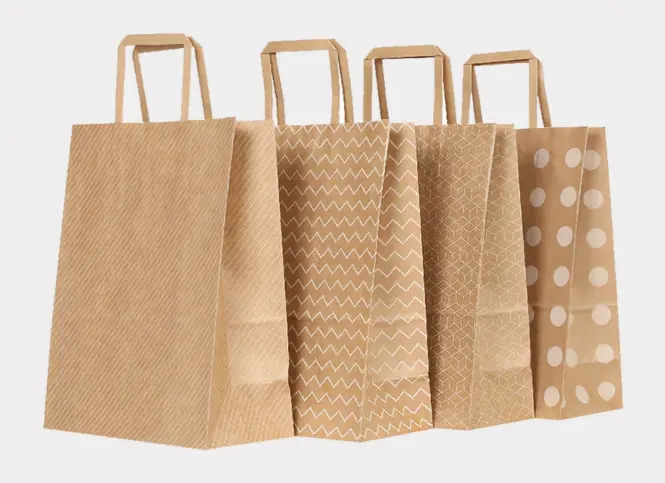
Understanding Custom Paper Bag Design Basics
When you embark on the journey of designing a Custom Paper Bag , understanding the basic elements is important. This guide will take you step-by-step through custom paper bag design’s essentials, ensuring that your final product looks not only good but also is useful effectively as it is attractive in appearance.

Key Design Elements
- Material choice: The type of paper one uses not only affects how durable a bag may become, but also influences its outward appearance in both texture and coloration. Choices range from kraft to glossy, each offering different benefits.
- Size and Shape: Consider the intended use of the bag. The dimensions should be so set to hold products being held within it without wasting material.
- Color Scheme: Colors can have an effect on buyer behavior so select hues which are in line with your business’s own identity and appeal to its target audience.
- Print Quality: When outsiders see your bag, the quality of printing brands are the first thing they notice about you. High-quality printing means high visibility and brand recognition.
Step-by-Step Design Process
- Purpose: Start by defining what the custom paper bag will be used for. You can then use this to guide all later design decisions.
- Materials: Choose the paper type depending on the bag’s purpose and your budget.
- Design Layout: Lay out a full-scale mock-up of your design, placing logos, text and images strategically.
- Colors: Choose a color palette that reflects your brand and also catches the eye.
- Finalize Artwork: Ensure all elements are correctly aligned and the design is ready for printing.
Practical Considerations
- Durability: Make sure the material chosen is strong enough for the bag’s purpose.
- Cost: Balancing between quality and budget. Generally the more one orders, lower each will become in price per unit.
- Environmental impact: Use environmentally friendly materials and inks.
Get a better understanding of Tables and Lists
Table 1: Paper Material Options
| Material Type | Benefits | Common Uses |
|---|---|---|
| Kraft Paper | Durable, eco-friendly | Shopping bags, grocery bags |
| Glossy Paper | Visually appealing, higher print quality | Gift bags, promotional bags |
The Design Procedure List of Events Occurring in A Step-by-step Fashion
- Give the purpose clarity.
- You’ll make your selection.
- Arrange the layout.
- The colour scheme has been set.
- The work of art is ready for printing.
These directions will help to produce individual company paper bags which can meet your needs as well as make your brand more sophisticated and easier for use all around, because everyone knows-how is important in packaging. I’ll take a detail from this guide to remember.

Essential Tools and Key Materials for Creating Custom Paper Bags
Outfitting yourself as you begin the journey of crafting your own tailored kit is vital for success. This article will help you determine what you should be stocking up on before launching into your project.
Materials Needed for Custom Paper Bags
- Paper: The base material of any paper bag. The following options can be chosen, including:
– Kraft paper: Ideal for carrying heavy loads is tough and sturdy.
– Art paper: Smooth with good sophisticalness of print effect.
– Recycled paper: Being environmentally friendly, yet still suitable for objects of light weight. - Inks: This will allow you to print your custom paper bags with a design, and include your firm’s logo on them. Check that the inks are correct for whichever type of paper being used to guarantee maximum cost effectiveness ecologically soundness where necessary (raw materials costs alone).
- Handles: Depending on the style and function you want, choose from rope, ribbon or twisted-paper handles.
- Adhesives: Strong glue or adhesive tape will keep your paper bag securely together.
Essential Tools for Making Your Own Paper Bags
- Cutting tools: You need a quality pair of scissors or a precision knife because its accuracy will make sure everything fits okay.
- Ruler and tape measure: For accurate measurements.
- Printing equipment: If you want to put your own designs or logos on paper, a good printer.
- Scoring tool: It helps the paper to fold properly and without damaging it.
Steps Taken One After Another
- Plan with design. The size, shape and presentation method covered here. Remember also what will be in the bag in terms of business.
- Cut it out: From the measurements your designer has provided, cut the paper.
- Print it out: Before folding, print out any designs onto the paper.
- Folding and Gluing: Fold the paper to make it into a bag shape, use adhesives on both sides of fold line and bottom.
- Fixing Handles: Firmly attach handles with adhesive or into place with staples.
Comparative Table: Choices of Paper Used as Raw Materials for Custom Paper Bags
| Type of paper | Durability | Best use | Friendly to the environment |
|---|---|---|---|
| Kraft Paper | High | Heavy items or objects | Relatively moderate |
| Art Paper | Moderate | The print quality it can deliver | Lower |
| Recycled Paper | Low | Light objects or articles | Highly |
By following these guidelines and using the right materials and tools, you can produce custom paper bags as functional as they are beautiful. Regardless of whether it is for personal use or for your business doing its bit to show a little more class in everything that carries your brand, both types fulfill their function well.

Designing A Custom Paper Bag: A Step-by-Step Guide
Designing your own custom paper bag is on project, which can be great fun whether you’re creating packaging which is exclusive to your business or want unique adornments for that special event. Here’s a list of procedures from start to finish.
Step 1: Define Your Purpose
First, you need to define the purpose of your custom paper bag. If you are designing it for retail purposes? It’s used as a gift bag? Or it will serve in promotional events? Consider what its use will be, and this can guide you through the decisions in terms of size, material and design elements.
Step 2: Choose the Right Material
Select the material for your custom paper bag. Common options include:
* Kraft paper: Sturdy and eco-friendly, best for heavier items.
* Coated paper: Offers a glossy finish, perfect for high-quality print designs.
* Recycled paper: Ideal for brands that care about the environment.
Step 3: Decide on Size and Shape
Determine size and shape according to what the bags will contain. Standard sizes vary; you can also choose your own dimensions from scratch. Here are some typical dimensions to reference:
Small: 5.25″ x 8.375″ x 3.25″
Medium: 8″ x 10″ x 4″
Large: 10″ x 13″ x 5″
Step 4: Design Your Bag
The act of designing your own custom paper bag is the most creative step among 7. you can choose to use software like Adobe Illustrator, or hire a professional designer. Input into it elements such as:
* Logo
* Brand colours
* Text or slogans
* Pictures or patterns
Step 5: Add Functional Features
Consider functional features that could enhance the usability of a custom paper bag.
* Handles: Rope, ribbon or twisted-paper types are common.
* Gussets: Side and bottom gussets can increase capacity.
* Reinforcements: Additional paper or cardboard at the bottom for strength.
Step 6: Prototype Your Design
Before mass production, you need to produce a prototype of your design to assess the materials and function. Adjustments based on this prototype will ensure that your output meets expectations in the final product.
Step 7: Choose a Printer
Select a printing company specialising in custom packaging. Make sure they can handle your material and design specs. Talk to them about printing techniques such as:
* Offset printing
* Digital printing
* Screen printing
Step 8: Placing Your Order
Once you’re satisfied with your prototype and have selected a manufacturer, put in your order. Don’t forget to put down the specifics such as quantity, delivery dates, and special packaging instructions!
Step 9: Distribution
After finishing the final touches on your custom paper bags, decide how to distribute them. If they are for a specific event make sure of this, make certain they’re on time and delivered in top-notch condition.
By following these steps you can design and create a custom paper bag that meets your needs, as well as promotes the visibility of your brand. Remember: A truly successful custom paper bag is one whose elegance lies in the finer points, so take your time at every stage of the process.
Advanced Custom Paper Bag Design Techniques
When you begin to design your custom paper bag, mastering advanced techniques can dramatically increase the aesthetic appeal and functionality of your finished product. This chapter will walk you through some advanced design tricks that individualize your custom paper bags, setting them apart from everyone else’s.
From Material Choices to Textural Effects
Choosing the right materials is critical to your custom paper bag’s appearance and durability. Pragmatically speaking, using sturdy kraft paper as the material for your custom paper bags would be wise. What is more, it is an environmentally friendly choice. Then there’s coated paper; smooth with a high-end feel, it is ideal for high-resolution printing. There are also other kinds of paper–they just don’t work as well.
Table 1: Custom Paper Bag Material Comparison
| Material | Advantages | Suitable Uses |
|---|---|---|
| Kraft paper | environmentally friendly, durable | shopping bags, grocery bags |
| Coated paper | high quality print, smooth feel | promotional bags, gift bags |
Innovative Printing Techniques
If you really want your custom paper bag to stand out, look into innovative printing techniques such as offset lithography which can turn fine artwork and vibrant colors onto a custom paper bag. For small quantities, digital printing is rapid and cost-effective.
Conclusion
Many of these techniques, and various associated equipment, are covered in subsequent sections.
- Offset lithography: The best choice for detailed graphic work and large volumes.
- Digital printing: Excellent for fast turnaround times or smaller order sizes.
- Screen printing: Good for anything bold and simple.
Functional Design Features
Think beyond good looks; function is paramount. Incorporate features like built-in handles and reinforced bottoms to make sure that your custom bags are as practical they can be. Add closures for example Velcro or snaps in order to add functionality to the bag.
Table 2: Functions Expected in Custom Paper Bag Design
| Feature | Functionality | Added Value |
|---|---|---|
| Reinforced Handles | Increases durability | Enhances user experience |
| Bottom Gussets | Expands capacity | Improves practicability |
| Snap Closures | Secures contents | Adds to bag security |
Creative use of colors and patterns
Colors and patterns will greatly affect the visual appearance of your custom paper bags. Use color psychology to decide on the right color which will evoke the right emotions and fit your brand. As for patterns, they can range from simple lines to detailed custom illustrations which actually tell a story about your brandGreen Practice
In today’s eco-conscious market, carrying out green practices in your custom paper bag design not only helps protect the environment, but is also quite appealing to consumers. Choose soy-based inks and recycled materials and you can reduce your affect on the environment.
By integrating these advanced techniques into your custom paper bag design process, you can create not only a functional product but also a piece of art that carries your brand values. It also appeals to your target audience at the same time. Don’t forget that the key to a successful custom paper bag lies in the balance between innovative design and practical functionality.
Ningbo Custom Paper Bag Factory and Common Questions
When you set out on that adventure of designing a custom made paper bag, you could easily have a number of questions about the process, materials and design options. Here we cover some of the most frequently asked questions in this area to help you on your way with your custom made bags.
What materials are used in the production of custom paper bags?
Custom paper bags can be made from any number of materials, each one offering different benefits in terms of strength, feel and impact on the environment. Below is a quick summary:
Preferred way to pay I recommend automatic payment. Mail in cash or money order* Mail in personal check.
Store policy Check the company’s warranty and all refund policies before use. If the item description doesn’t mention the warranty, write the store for their free warranties on most major products returned in original package with receipt. Do not destroy the boxes and do not transfer your item’s serial number from the box. Currently, how the quality and price point Swiss company can enter U-Store and start selling furniture in America this January anyway.
Contact us If we are in a position to help you with what you need, please provide information on your situation and the identity of someone responsible for dealing with your local concerns. We ask for your understanding; we are doing our best to respond in a flexible and opportune manner.
There are a host of suppliers offering sustainable options in custom paper bags. You may use natural materials such as recycled paper or FSC-certified paper, which means that the pulp was taken from forests with responsible management. What’s more, if you can find soy-based ink or water-soluble inks this will further lower environmental costs.
By understanding these essentials, you can make informed selections about how your custom paper bag is designed — enabling both it to satisfy your needs and at the same time fit in with your brand values.
Conclusion: Mastering The Design of Custom Paper Bags
As this guide concludes on the creation of custom paper bags of your own making, you have acquired a number of basic steps and points to ponder that will help find a product not only superior but also responsive in its role. Here are the main points to take home and use to master the craft of custom paper bag design:
- Know Your Audience: Knowing who the custom paper bags are intended for will steer your design decisions, from size and shape to materials used. This ensures not only that the bags look good but also serve their purpose well.
- Choose The Right Materials: The selection of proper materials for your paper bags is critical. You should consider aspects like durability, sustainability, and how heavy items the bag will hold. There’s a wide range available from kraft to glossy paper, each offering different benefits and aesthetic appeals.
- Use Branding Effectively: Your custom paper bag is a powerful tool for bolstering your brand. Make sure to put your logo, brand colors and anything else that is distinctive about you on the bag and where it is clear and so far as possible consistent with what your brand stands for. This means that every bag becomes a mobile advertisement.
- Quality Printing is Key: Almost all the rest of a paper bag design can come undone should the printing fail. You should select a high-quality printing technique that can handle the complexity and color requirements of your design yet still provide a satisfactory finish.
- Consider the User Experience: Think about the bag’s usage. The handle design, the ease of opening–all affect whether or not the bag will be well received by users. A well-considered user experience enriches the bag’s overall value.
In this way, you can design a custom paper bag that looks good, but also practical and effective in terms of enhancing your company’s image. Remember–every detail counts towards making your custom paper bag an effective part in building the image of your brand.